AT&T's (NYSE: T) low-cost Google (NASDAQ: GOOG) (NASDAQ: GOOGL) Fiber alternative comes with a fairly huge "catch".
On the positive side, "GigaPower" service, which is offered mostly in markets where the company competes with Google, offers very high-speed home fiber-optic Internet service for as low as $70 a month. That's the same price the search giant charges, and on the surface it seems like a fair deal.
The problem is that this price requires customers to opt in to AT&T's "Internet Preferences" program, "which gives the company permission to examine each customer's Web traffic," according to Ars Technica. This leads to targeted ads appearing when you visit websites, email offers coming to your inbox, and even junk mail sent to your home.
Opting out of the traffic-recording program will cost you a minimum of another $29 a month. Add in AT&T's phone and television service through GigaPower and you will pay as much as $60 a month in privacy fees to keep AT&T from snooping on you, according to the technology website. To make a bad deal even worse, certain installation and modem rental fees are waived for people who take the privacy-busting deal, making the cost for AT&T to not record your Web browsing even higher.
GigaPower promises speeds that are comparable to what Google offers. Source: Screenshot.
AT&T tries to sell this as a positive You have to give AT&T credit for gumption as its Internet Preferences Web page works really hard to sell the program as a positive. The company attempts to sell the idea that it offers better pricing in exchange for customers letting the company "use your individual web browsing information, like the search terms you enter and the web pages you visit, to tailor ads and offers to your interests."
AT&T would have you believe this is a good thing that won't necessarily lead to you receiving more ads when you are online (though it might) but getting ones "more suited to your interests." The company laid out the following examples:
If you search for concert tickets, you may receive offers and ads related to restaurants near the concert venue.
After you browse hotels in Miami, you may be offered discounts for rental cars there.
If you are exploring a new home appliance at one retailer, you may be presented with similar appliance options from other retailers.
The ads could come "online, via email or through direct mail." AT&T does promise not to directly sell your personal information "to anyone, for any reason. Period." That, however, is cold comfort when the company is exploiting your personal information to market to you.
AT&T is taking advantage of customers Sure, some customers might want the type of advertising AT&T describes above. Most people might even be indifferent.
Where AT&T has gone wrong -- and why it's hard to see GigaPower as an alternative to Google Fiber for anyone with a choice between the two -- is that opting out should not come with a penalty fee. This deal might be more palatable if the company was more up front about what it is doing.
Maybe if the base price were higher and customers received a discount for agreeing to have their Web activities tracked, Internet Preferences would seem a little less sinister.
That's a subtle difference, but one that would put more power in customers' hands.
Of course, doing it that way would mean AT&T would not advertise the same price Google offers. Listing a higher price and showing that it was willing to meet the search leader's deal only with a significant customer concession would make it clear that GigaPower and Google Fiber are not comparable even if their networks and speeds are.
Since GigaPower is being offered specifically as an answer to Google Fiber it's hard to see how any customer would pick the AT&T service over one that does not track their activities in minute detail.
This $19 trillion industry could destroy the Internet
One bleeding-edge technology is about to put the World Wide Web to bed. And if you act right away, it could make you wildly rich. Experts are calling it the single largest business opportunity in the history of capitalism... The Economist is calling it "transformative"... But you'll probably just call it "how I made my millions." Don't be too late to the party -- click here for one stock to own when the Web goes dark.
Wednesday, April 1, 2015
From Breast Cancer To Better Skin: Is Rose Hip The New Natural Wonder ‘Drug’?
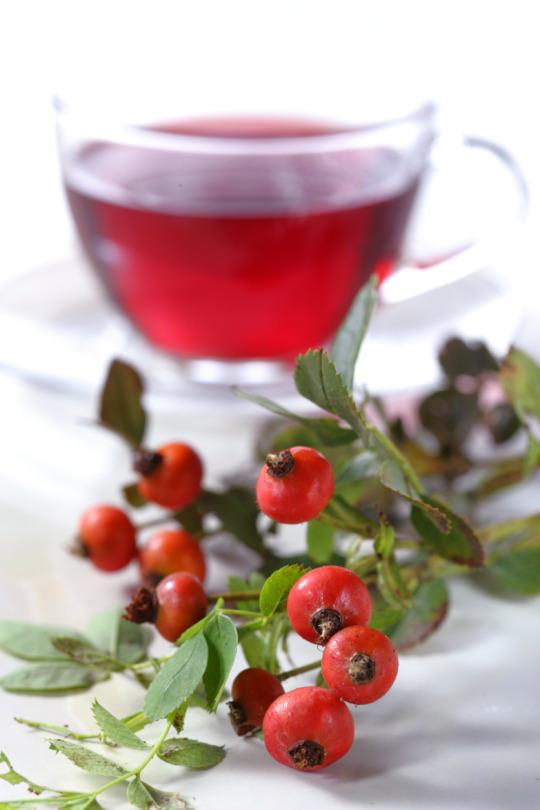
The rose hip is the fruit of the rose plant — and it may have some major health and beauty benefits. (Photo: Getty Images)
Miranda Kerr slathers it on her face before she goes to bed at night, Rose Byrne swears it helps regulate her sensitive skin, and Kate Middleton’s facialist reportedly uses it, too. But while rose hip seed oil has a serious celebrity following, new research suggests rose hip itself might have powerful health benefits, too.
A new study from North Carolina Agricultural and Technical State University found that rose hip extract reduces the growth and movement of cells from triple negative breast cancer, an aggressive form of cancer that typically affects young women.
Researchers said in the study that they chose to analyze rose hip extract because of its flavonoids and polyphenols that have the potential to prevent cell growth and movement. For the study, scientists treated tissue cultures of triple negative breast cancer cells with different concentrations of rose hip extract, and found that exposure to the highest concentration decreased breast cancer cell growth by 50 percent.
While more research is needed on the effect of rose hips on cancer cell growth, experts say the fruit of the rose plant has already been found to be good for general wellness. Registered dietitian Robin Barrie Kaiden tells Yahoo Health that rose hips can contain up to 60 times as much vitamin C as an orange, provide a good dose of immune-boosting vitamin A, and can act as a mild diuretic or laxative to relieve constipation.
Kaiden says rose hips can be taken daily and eaten raw, blended in a blender, or soaked in water overnight and then cooked in water for about a half hour. They’re also found in herbal teas, jams, syrups, pies, wine, bread, and even many over-the-counter cold-fighting products.
While there are many ways to ingest rose hips, registered dietitian Vandana Sheth tells Yahoo Health that fresh hips are the best way to get the high levels of vitamin C, since the processing methods used to create the dried version can strip out a lot of the nutrients. Just be careful to eat the outer layers only since the hairy, inner seeds of the fruit can irritate the intestines.
But the fruit’s perks don’t end there: It turns out the skin benefits of rose hip seed oil isn’t overstated by celebrities, either. “There is evidence to suggest that rose hip seed oil can help the integrity of the skin,” board-certified dermatologistCynthia Bailey, MD, tells Yahoo Health. “It has anti-inflammatory and anti-swelling benefits, and is also a good antioxidant to fight free radical damage.”
Bailey says rose hip seed oil can help moisturize your hair and nails, and increase the strength of your skin barrier to help your skin stay hydrated.
Rose hip seed oil naturally contains high levels of linolenic, linoleic, and oleic fatty acids, which are the building blocks for healthy, plump skin, says beauty expert Mally Steve Chakola, founder of M. Steves, a natural beauty line that uses rose hip seed oil as its signature ingredient. Chakola tells Yahoo Health that in addition to increasing moisture in the skin, rose hip seed oil can also help bring balance to people with acne-prone skin and heal the appearance of acne scars.
So, should we all become rose hip devotees? Maybe. While the fruit has many benefits, rose hips can interact with some drugs, so it’s best to consult your doctor first.
By now you’ve undoubtedly heard of Verizon’s “supercookies,” the unstoppable tracking cookies that Verizon uses to track every single unencrypted website you visit on your mobile device, whether you like it or not. After taking a tremendous amount of heat from users and even consumer rights organizations such as the Electronic Frontier Foundation, Verizon said back in January that it would create a means for users to opt out of its supercookie tracking.
Now, Verizon has finally created three ways for users to opt out of this invasive tracking technique — here’s everything you need to know.
First and foremost, let’s address what these “supercookies” are and why Verizon uses them. This is perhaps best summarized on the FAQ page for Verizon’s Relevant Mobile Advertising (RMA) program.
Here’s the important part:
When you use your mobile device, you often see ads on websites and apps. Using information we have from customers, we help marketers reach audiences with more relevant messaging.
The information we use for this program includes the postal address we have for you and certain consumer information such as your device type and language preference, as well as demographic and interest categories obtained from other companies. This information might include your gender, age range, and interests (i.e. sports fan, frequent diner, or pet owner).
In addition, we will use an anonymous, unique identifier we create when you register on our websites. This may allow an advertiser to use information they have about your visits to online websites to deliver marketing messages to mobile devices on our network. We do not share information that identifies you personally outside of Verizon as part of this program.
Some examples of Relevant Mobile Advertising could include: For a local restaurant that wants to advertise only to people who live within 10 miles or for a retailer advertising to people who have visited its website online, we help enable these ads to mobile devices on our network.
The Relevant Mobile Advertising Program uses a unique identifier that is inserted in certain web traffic to deliver ads to your mobile device. This identifier, known as a Unique Identifier Header or UIDH, is also used for other purposes such as authenticating devices on our network. More information about the UIDH can be found here.
The key here is that the UIDH cannot be killed by simply blocking cookies in your mobile browser settings, as is the case with more conventional (and less invasive) web tracking.
But now, you can finally opt out.
Verizon subscribers have three choices when it comes to opting out of the RMA program. First, you can visit this page on Verizon’s website. Simply log in and follow the on-screen instructions to opt out of RMA. A similar opt-out procedure is also available in the My Verizon mobile app.
Finally, subscribers can call Verizon on the phone at 1-866-211-0874 and request to opt out of the Relevant Mobile Advertising program.
One of the main problems travelers face is communicating with the locals. Even if you never leave home without your trusty phrase book, communication is as much about nonverbal cues as it is about talking.
In fact, people rely more heavily on hand gestures and body language when in situations where they are unable to verbally interact with someone.
But did you know that not all hand gestures mean the same thing in every country? In some places, gestures that we use on a daily basis in the U.S. to portray positive emotion or agreement, for example, might mean something highly offensive in a foreign land.
Take the OK sign — the simple hand signal where you put your thumb and first finger together to create a circular shape. In the U.S. we use it to convey agreement and compliance. Yet it is seen as offensive in Greece, Spain, and Brazil. In those countries it means that you are calling someone an a**hole. In Turkey, that sign is also an insult toward gay people.
So aside from keeping your hands firmly in your pockets while you are traveling, what can you do to ensure that you don’t insult the locals or end up in a bar brawl? The last time I checked, there was no section in any of my phrasebooks for hand gestures.
1. The chin flick. Brushing the back of your hand underneath your chin in a flicking motion means “get lost” in Belgium, northern Italy, and Tunisia. In France, this gesture is known asla barbe (”the beard”) and is the hand-sign equivalent of macho grandstanding.
You should probably just never do this. (Photo: Kyrylo Glivin/Alamy)
2. The fig.A clenched fist with your thumb between your first and second fingers means “screw you” (to put it mildly) in Turkey, Russia, and Indonesia. And in some countries it symbolizes lady parts. You know what I mean.
3. Forearm jerk. This is the action of punching your fist into your elbow joint while raising the other fist up in front of you. It will not get you a positive reaction in most parts of southern Europe or Brazil, and it’s used commonly by soccer fans wanting to send an offensive message to the fans of the opposing team.
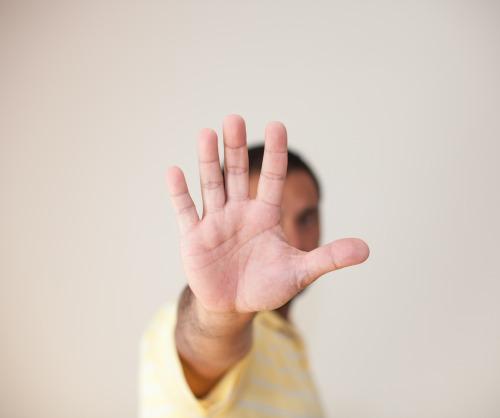
Talk to the hand. (Photo: Tuan Tran/Moment/Getty Images)
4. The moutza. In Greece, Mexico, the Middle East, and Africa, the action of raising your open hand, palm out, with spread fingers in front of someone is a serious sign of displeasure. Possibly one of the oldest hand gestures still in use, it dates all the way back to ancient Byzantium, when criminals were chained to donkeys and paraded through the streets, where locals would rub their own feces onto the prisoner.
5. The cutis. Flicking your thumb from the back of your upper front teeth toward someone is seriously nasty in India and Pakistan and simply means “f*** you.” Very nice. This sign will likely get you ejected from any place of business and not welcomed back.
6. Five fathers. Arab and Caribbean countries see the action of pointing your right index finger and the grouped finger tips of your left hand as a way of saying, “you have five fathers.” Or, in harsher terms, “your mother is promiscuous.” So if you want to get deported in the Middle East, this is your go-to.
There are also several gestures that we use on a daily basis in the U.S., almost as a reflex, that mean something completely different elsewhere.
You may want to rethink how you convey the word “no.” (Photo: Elijas van Roon/Corbis)
7. Head shake.Most people assume that nodding your head is the universal sign for “yes” and shaking your head is the sign for “no.” But in Greece and Bulgaria, these actions are reversed. This can lead to some serious confusion if you are being hit on or trying to order food off a menu.
8. Crossing your fingers.In Vietnam, crossing your fingers, as we would in the U.S. to wish for luck, depicts a woman’s genitalia and is considered extremely insulting if aimed at another person. It is the hand-sign alternative of calling someone thec-word.
Just never do this. (Photo: Thomas Nanos/Alamy)
9. Horns.The placement of your fingers to show horns, usually known as the symbol for “rock on,” has a different meaning in Spain, Greece, and Italy — where it is called the “corna” and is considered a suggestive gesture made to a man to imply that his wife is cheating on him. It dates back more than 2,500 years and signifies a bull’s horns.
You may think you are being friendly. You are wrong. (Photo: Alejandro Moreno de Carlos/Stocksy)
10. Thumbs up.The thumbs-up sign doesnotmean “that’s great” in Australia as it does here. There, it means “up yours” or the painful-sounding “sit on it.” Basically, you are telling a person that you hope he gets something inserted up his bottom.
11. Come on over.In the Philippines, using your hand to make a “come here” gesture is one of the most offensive things you can do. In fact, this gesture is deemed so bad that you can actually get arrested for using it. We promise you that thelastplace you want to end up on your vacation is inside a Philippine prison.
Don’t be a jerk. (Photo: Aleksandra Kovac/Stocksy)
12. Crossed arms. Crossing your arms in front of you is considered a huge sign of arrogance in Finland. Standing with this posture in a bar is likely to get you into a fight.
Some countries have their own unique gestures with specific meanings.
13. Fist shakes.In Austria, shaking two fists in front of you is a way of wishing someone good luck.
In France, this means you are itching for a fight. (Photo: Mahdees Mahjoob/Alamy)
14. Slapping your fist.In France, slapping the palm of your hand over your other fist is seen as an aggressive gesture that suggests you want to beat up the person it’s aimed at. It is similar to telling someone to step outside.
15. Hand shakes.In Russia, shaking hands, or doing pretty much anything else, over a threshold is considered extremely unlucky.
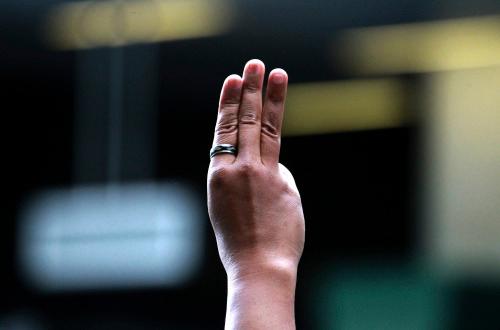
Do you have any idea why this could be considered offensive? (Photo: Wason Wanichakorn/AP Photo)
16. Three-fingered salute.In Thailand, the raised arm with three fingers extended (like the gesture used inThe Hunger Games) was outlawed after it became a symbol of opposition to the country’s military coup in 2012. How very original.
17. Feet gestures.In India, one of the worst things you can do socially is to show a person the soles of your feet or use your feet to point to or touch things. Feet are seen as unclean and the lowest point of the body. Resist the urge to give yourself a pedicure in public, or you might be faced with some angry locals.
Friday, March 20, 2015
Popular Wines Contain
High Levels Of Arsenic, Lawsuit Alleges
Arsenic in wine? Say it isn’t so!(Photo: Steve Lupton/Corbis)
An inexpensive bottle of wine may seem like a bargain, but it may come at
a cost to your health. A proposed class action lawsuit filed in California on
Thursday claims that some popular wines have arsenic levels three to five times
greater than the concentration allowed in drinking water,according to news reports.
The lawsuit involves more than two dozen California wine companies,
including the popular brands Franzia, Sutter Home, Glen Ellen, and Beringer.
The Denver-based laboratoryBeverageGradesfirst
discovered the high arsenic levels. Tests of approximately 1,300 bottles of
wine revealed that more than one-quarter of them had arsenic levels higher than
the upper limit allowed in drinking water by the Environmental Protection
Agency (EPA).
Cheaper wines tended to have higher arsenic levels, BeverageGrades
co-founder Kevin Hicks told CBS. Franzia White Grenache, for example, came in
at five times the EPA’s limit for arsenic in tap water. Trader Joe’s popular
Charles Shaw White Zinfandel had triple the limit. A spokesperson for Trader
Joe’s told CBS that the company is “investigating the matter” and taking the
concerns seriously.
The news about arsenic in wine is the latest in a series of recent
headlines on arsenic contamination in common foods. Significant levels of
inorganic arsenic, a known carcinogen, were detected in rice in 2012 and again
late last year by Consumer Reports, asYahoo Health reported.
Apple juice has also been under scrutiny since a 2011 Consumer Reports studyon arsenic in
the juices was released. In 2013, the U.S. Food and Drug Administrationproposed a benchmarkfor the
acceptable amount of arsenic in apple juice, but some expertsrecently criticized the movefor not
setting the limit low enough.
The EPA sets the maximum limit for arsenic in drinking water at 10 parts
per billion. The highest level of arsenic found in the BeverageGrades tests was
50 parts per billion. The U.S. does not regulate arsenic levels in wine or
other beverages besides drinking water.
To put that in perspective, consider that 50 parts per billion was the
EPA’s standard for arsenic in drinking waterbefore 2001.
At 50 parts per billion, the lifetime risk of dying of cancer due to
arsenic in drinking water — assuming that people drink two liters of tap water
per day — is one in 100, according toan analysisby the National Resources Defense Council. For an arsenic level of 10
parts per billion (the current EPA limit), the risk is one in 500. The NRDCcalculated the statisticsusing data from a 1999 study of U.S. tap
water conducted by the National Academy of Sciences.
High levels of inorganic arsenic are known to cause several types of
cancer, according to theAmerican Cancer Society(ACS).
A U.S.studyin the journal Annals of Internal Medicine also found that long-term
exposure to low or moderate arsenic levels may increase the risk for
cardiovascular disease, coronary heart disease, and stroke. RecentEuropean researchalso found that long-term exposure to
arsenic in drinking water may contribute to diabetes.
In California, businesses are required to alert
consumers if a product contains “a chemical known to the state to cause
cancer.” The lawsuit, which was filed in Los Angeles Superior court, seeks
unspecified damages and a court order requiring wineries to address the arsenic
levels in their products.
Tuesday, March 17, 2015
Microsoft Is Killing Off the Internet Explorer Brand
While Microsoft has dropped hints that the Internet Explorer brand is going away, the software maker has now confirmed that it will use a new name for its upcoming browser successor, codenamed Project Spartan. Speaking at Microsoft Convergence yesterday, Microsoft’s marketing chief Chris Capossela revealed that the company is currently working on a new name and brand. “We’re now researching what the new brand, or the new name, for our browser should be in Windows 10,” said Capossela. “We’ll continue to have Internet Explorer, but we’ll also have a new browser called Project Spartan, which is codenamed Project Spartan. We have to name the thing.”
Internet Explorer will still exist in some versions of Windows 10 mainly for enterprise compatibility, but the new Project Spartan will be named separately and will be the primary way for Windows 10 users to access the web. Microsoft has tried, unsuccessfully, to shake off the negative image of Internet Explorer over the past several years with a series of amusing campaigns mocking Internet Explorer 6. The ads didn’t improve the situation, and Microsoft’s former Internet Explorer chief left the company in December, signalling a new era for the browser.
Capossela also detailed the power of using the Microsoft brand over just Windows or Internet Explorer, and showed off some research data on a new name for the company’s browser vs. Internet Explorer. Putting Microsoft in front of the new secret name increased the appeal to some Chrome users in the UK. “Just by putting the Microsoft name in front of it, the delta for Chrome users on appeal is incredibly high,” says Capossela.
Microsoft is clearly testing names with market research, but it’s unclear when the company plans to unveil the final name for its Internet Explorer successor. Judging by Microsoft’s own research, it’s obvious the company will move as far away from Internet Explorer as possible, and it’s likely Project Spartan will have the Microsoft name attached to it.
Elsewhere in Capossela’s talk, the Microsoft executive also discussed the ways the company will make money in future, and clever ways the company is making use of social media. Microsoft has started to use artists to respond to Twitter users with personalised images, and at least one from the Xbox team was successful at creating attention with an impressive 35,000 retweets. It’s all part of improving Microsoft’s brand perception, and a general admission from the company that it’s ready to be loved again.